
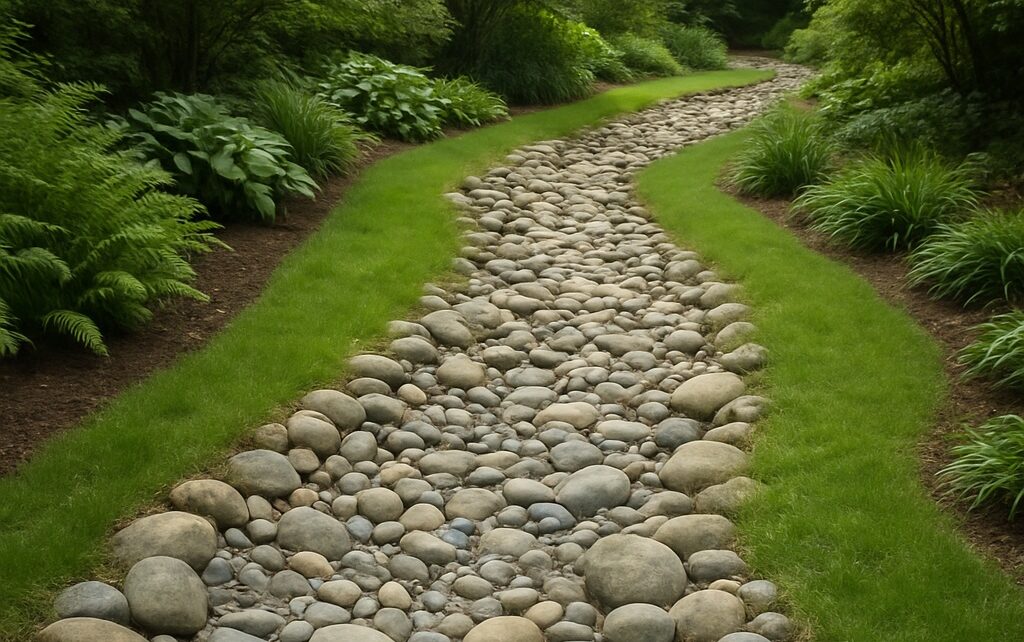
Walk across your backyard a day after a rainstorm. Does your footwear sink with an audible sound? In landscaping practice, experts call this the “Squish Test” and failing it means you have a water movement problem. Trapped runoff threatens your home’s foundation, which makes fixing standing water in lawn areas essential.
Smooth stones actually function as a hidden highway system for excess moisture. Because they don’t pack tightly together, the natural gaps between these round stones create dedicated water movement systems that effortlessly steer floods away from your house. Proper river rock drainage provides a reliable release valve that protects your property while adding immediate curb appeal.
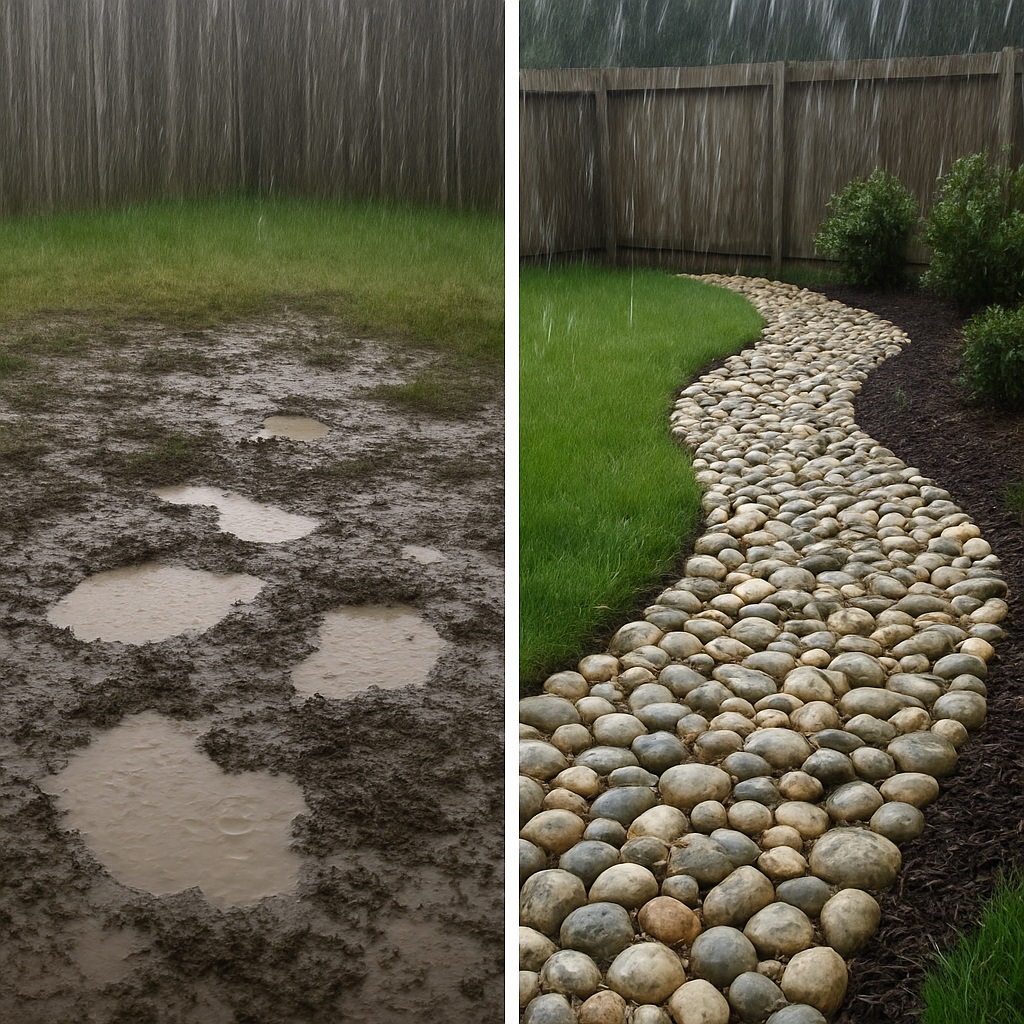
The Physics of Smooth Stones: Why River Rock Beats Gravel for Flow
The secret to fixing a soggy lawn lies in the stone’s shape, particularly when comparing smooth stones versus crushed gravel. Driveway stones are jagged and angular, designed to lock tightly together under heavy cars. While that interlocking action creates a solid surface, it stops rainwater from quickly moving away from your home.
To eliminate backyard puddles, you actually want rocks that refuse to fit together perfectly. When you pile up rounded stones, their curved edges leave empty gaps between them, which landscapers call “void space.” Think of a jar filled with round marbles; there is always room for water to easily slip through the cracks. This generous void space makes river rock exceptional for drainage, acting like an underground channel for heavy rain.
Selecting the best size stone for water flow ensures your system lasts, with one to three-inch pieces hitting the perfect sweet spot. They create large enough tunnels to prevent soil from clogging the flow, providing the foundation for functional landscape features like a dry creek bed.
Creating a Dry Creek Bed: Turning a Muddy Path into a Functional Feature
If every thunderstorm washes your mulch into the driveway, you need a solution that works with gravity rather than fighting against it. The first step in landscaping for heavy rain is “Natural Runoff Mapping,” which simply means observing where water naturally travels across your yard’s slope. Instead of forcing water into a straight, unnatural line, you let the existing grade dictate the curves, transforming a muddy, eroded track into a gorgeous focal point.
Learning how to build a dry creek bed involves mimicking nature to safely manage these heavy downpours. Follow this four-step mapping process to secure your yard:
- Marking the path: Trace the winding route water naturally takes downhill.
- Measuring the slope: Ensure the ground drops one inch for every four feet.
- Choosing stone graduation: Select a mix of small pebbles, medium cobbles, and large boulders.
- Placing anchor rocks: Position heavy boulders on outside curves where water hits hardest.
Mixing these sizes utilizes a technique called “Graduated Stone Sizing.” Just like a real stream, placing heavy anchor stones on the edges prevents fast-moving water from washing away the smaller stones in the center of your river rock drainage ditch. For surface pooling, a dry creek handles the threat beautifully. However, for issues that lie beneath the surface, an underground system provides the necessary protection.
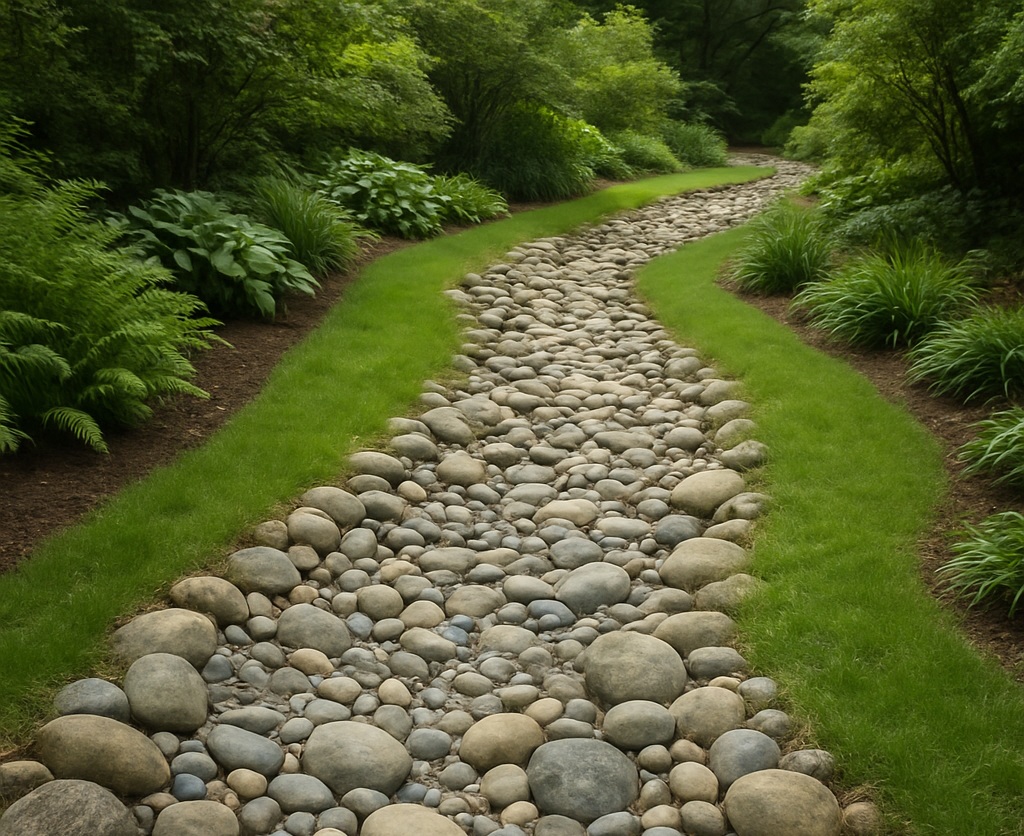
The French Drain Upgrade: How River Rock Protects Your Foundation
When heavy rains hit, your yard acts like a massive sponge. As the earth fills up, the trapped water creates hydrostatic pressure—a strong, invisible force pushing directly against your basement walls. A river rock French drain acts as a hidden release valve for this buildup, capturing the water underground before it can cause structural damage, ultimately preventing soil saturation in gardens and around your foundation.
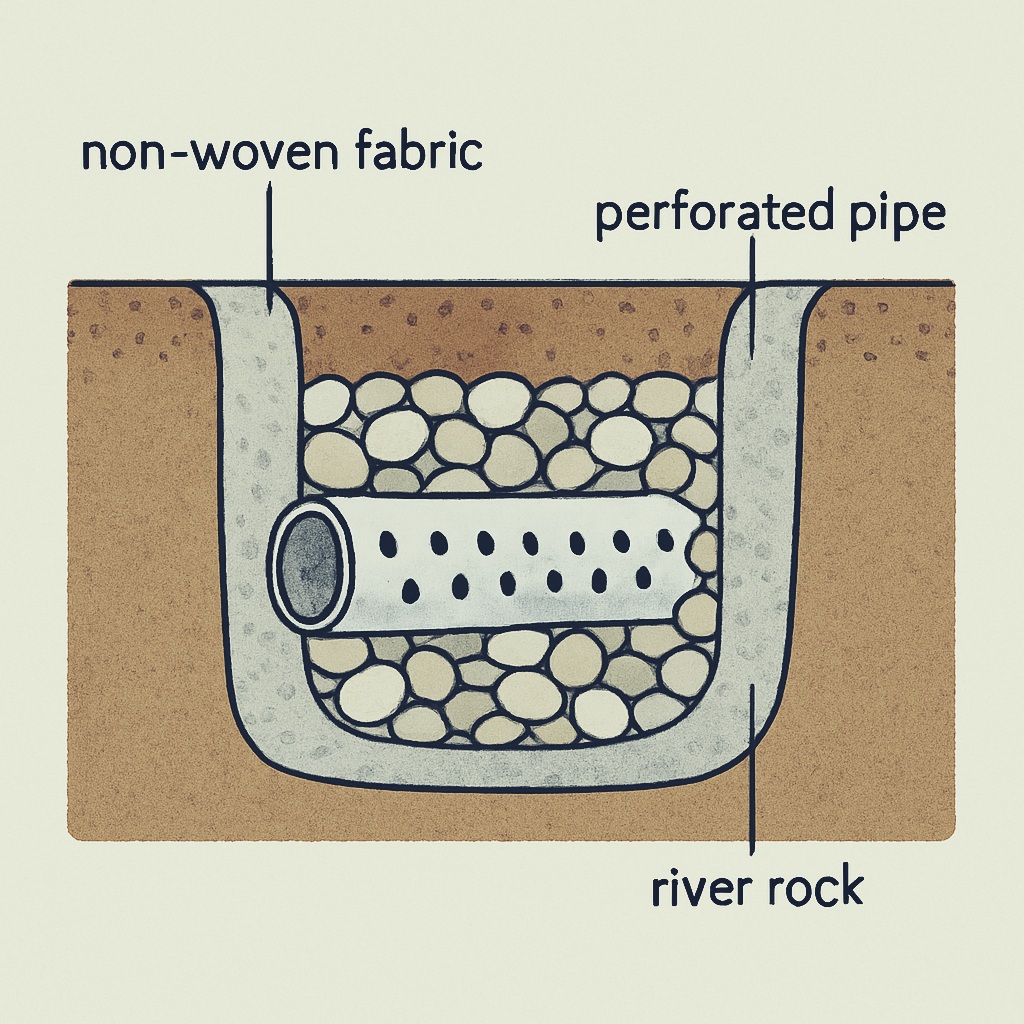
At the heart of this system is a specialized tube with small holes, known as a perforated pipe for water runoff. Because smooth river rocks do not pack together tightly like dirt or jagged gravel, they leave open tunnels for water to easily drop down into the trench. These heavy stones also act as a structural shield, absorbing the weight of the earth above so the plastic pipe below is never crushed.
Combining the right sturdy pipe with the generous gaps created by smooth stones guarantees your sub-surface drain flows freely for decades. However, even the toughest pipe will quickly clog with mud without a crucial barrier separating the dirt from the stone. Proper underground layering is essential; simply dumping rocks into a trench will inevitably lead to failure.
Essential Underground Layers: Why You Can’t Just Dump Rocks in a Hole
Moving underground water constantly carries mud into your trench, eventually filling the vital gaps between your stones. To prevent this sediment infiltration, you need a protective barrier. Using landscape fabric for drainage projects acts like a heavy-duty coffee filter; it lets rainwater pour through freely but securely locks out clog-causing dirt.
Figuring out how deep to dig a drainage trench is your next vital step, as most residential yards require an 18-inch depth to stack these layers safely. To avoid a failing system, always build with these three underground essentials:
- Non-woven geotextile fabric (maximizing non-woven geotextile fabric benefits like superior long-term filtration)
- Trench depth markers (ensuring your trench maintains a steady downhill slope)
- Clean, washed river rock (stopping unwashed stone dust from creating a messy “Dirt Plug”)
These hidden layers provide the necessary foundation for a permanent, highly functional drainage system.
Your Dry Yard Action Plan: Choosing the Right Stone and Starting Today
Protecting your foundation starts with observing your property during heavy rain. Map where the surface water pools, then select 1-to-2-inch smooth stones to manage the drainage efficiently.
To ensure your backyard erosion control methods last, simply clear away fallen leaves annually to keep the water pathways open. By implementing these natural drainage solutions, frustrating muddy patches become permanent features that provide reliable protection and peace of mind during the heaviest downpours.